Showing posts with label Non- fiction. Show all posts

Saturday, June 21, 2025

When We Fail to Learn from History: Donald Dokins, Robert “Yummy” Sandifer, and the Tragedy of Lost Youth


Neri,G DuBurk,Randy (2010) Yummy: the Last Days of a Southside Shorty. Paperback | Lee & Low Press | ISBN-13:978-1584302674 | $12.20 USD | 96 Pages
15th Year Anniversary


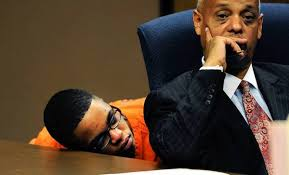
In June of 2013, 15-year-old Donald Ray Dokins was sentenced to 90 years to life for murder and attempted murder in connection with a gang shooting that took place in Watts, California. Dokins, a member of the Fudgetown Mafia Crips, was reportedly aiming for a rival gang member, Mauro Cortez, but instead struck and killed Cortez's 1-year-old son, Angel Cortez Nava, and injured the father.

The story is gruesome and heartbreaking. But unfortunately, it's far from unique.

This wasn’t the first time America watched a young boy take a life in the name of gang loyalty nor the first time a community was left grappling with grief and blame. Almost two decades earlier, in 1994, a similar tragedy occurred in Chicago, Illinois, one that shocked the nation and has remained a painful example of youth lost to violence.

*


Donald Ray Dokins (16 yrs. old) turn to his lawyer after being sentence to 90 years – life for accidentally shooting a 1 year old boy in a gang shooting.

Robert “Yummy” Sandifer: A Short Life, A Long Shadow

Before Donald Dokins, there was Robert “Yummy” Sandifer an 11-year-old boy caught up in the chaos of Chicago’s gang war. His story was immortalized in the powerful graphic novel, Yummy: The Last Days of a Southside Shorty, which I couldn’t put down and still recommend to this day.

Yummy’s upbringing was a recipe for disaster: he was raised by his grandmother, often in a crowded house with up to 19 other children. His mother was addicted to drugs, and his father was incarcerated. Abuse was a regular part of his early life—he was reportedly beaten and burned with cigarettes. He began racking up arrests at a very young age, yet kept getting released back into the same toxic environment.

In 1994, while trying to prove himself to the Black Disciples gang, Yummy opened fire at rival gang members in his neighborhood. Instead, he hit and killed 14-year-old Shavon Dean, an old friend. That one mistake launched a media frenzy. His photo round face, small frame, eyes full of pain was broadcast on every major network. The nation watched as police searched for a child killer.


Betrayed by His Own

Yummy went into hiding. Two fellow gang members, brothers Craig (16) and Derrick Hardaway (14), offered to take him to safety. But instead of helping him escape, they took him to a grassy underpass and shot him twice in the head on orders from their leaders.

Yummy was killed by the same gang he had tried to impress. Betrayed by the only family he knew.


Who’s to Blame?

After Yummy’s death, the blame game began:

  • Neighbors blamed the abusive home and absent parents.

  • The media blamed the state for repeatedly turning him loose after arrests.

  • Judges blamed the laws that allowed gangs to exploit minors, knowing they couldn’t be tried as adults.

Was Yummy a monster? Or was he the result of a system that failed him again and again?

The Cycle Continues

Fast forward to 2013, and again in 2025, and the same headlines echo across American cities from Watts to West Philly. Recently in my hometown of Philadelphia, youth gun violence continues to take innocent lives:

  • A fatal shooting during a music video shoot.

  • A deadly incident in Upper Darby.

  • A double shooting inside a West Philly corner store.

These aren’t just statistics. These are real children, caught in real cycles of violence and trauma. Boys like Donald and Yummy didn’t just wake up one day and decide to destroy lives. They were raised in communities riddled with poverty, neglect, abuse, and a total lack of resources where gangs become surrogate families, and guns become the only form of power.

Learning from the Past

I use Yummy: The Last Days of a Southside Shorty in my youth book club discussions as a powerful deterrent to gang culture and street violence. Teenagers relate to Yummy not because they’re violent, but because they understand pain, fear, and the hunger for belonging.

This book reminds them and us that the choices these boys made didn’t come from nowhere. And that if we don’t interrupt these cycles early with love, structure, resources, and mentorship then history will keep repeating itself.

Final Thoughts

Donald Ray Dokins. Robert “Yummy” Sandifer. Shavon Dean. Angel Cortez Nava.
These names tell a story—young lives lost, some to bullets, others to prison cells. If we don’t look beyond the crimes—if we fail to address the root causes, to support these kids before it’s too late—we’ll keep mourning more “Yummys,” more Donalds, more Angels.

It’s striking how some of these stories are from the past, yet they still resonate deeply with what’s happening today.

Let this be more than just another tragic story. Let it be a wake-up call.

Overall, this book is a classic.

— Mr. Philly Librarian


Friday, June 13, 2025

The Warmth of Other Suns: The Epic Story of America's Great Migration by Isabel Wilkerson


Wilkerson,Isabel.(2011) The Warmth of Other Suns: The Epic Story of America's Great Migration. Hardback | Vintage Press  |  ISBN 13:978-0679763888   |  $12.66  | 640 Pages


The Warmth of Other Suns is a skillfully written masterpiece by Pulitzer Prize-winning author Isabel Wilkerson, chronicling what she calls “the most unreported story of the twentieth century”: the early 20th-century migration of African Americans out of the South. In 1910, 90% of African Americans lived in the South. During the Great Migration, millions relocated to urban centers in the North and West—including Philadelphia in search of jobs, an escape from racial prejudice, and the hope of a better life. But one question remained: Did they find what they were looking for?

Wilkerson spent over ten years researching this book, interviewing more than 1,200 people. Out of those, she selected three dozen for in-depth interviews and chose three key individuals to anchor the book’s powerful narrative.

She tells the stories of:

  • Ida Mae Gladney, who left the cotton fields of Mississippi in 1937 and moved to Chicago.

  • George Starling, who fled Florida in 1945 after standing up to racism and started anew in Harlem, New York.

  • Robert Foster, who left Louisiana in 1953 to become a doctor and ultimately served as Ray Charles’s personal physician.

This is one of the most compelling books I’ve read this year. It’s still in high demand at the Free Library of Philadelphia and is a perfect choice for book clubs of all ages. Reading it answered some of my own questions about my family's migration—on my grandmother’s side, from Maysville, South Carolina to Philadelphia, and on my grandfather’s side, from Dendron, Virginia (Surry County), also to Philadelphia.

Wilkerson also makes it clear that not everyone left the South simply looking for opportunity many were forced out. Under the brutality of Jim Crow, people fled for their lives, sometimes abandoning land, homes, and everything familiar in the middle of the night to escape violence and protect loved ones.

Overall, this book is a classic.

Mr. Philly Librarian


NATIONAL BOOK CRITICS CIRCLE AWARD WINNER
LYNTON HISTORY PRIZE WINNER
HEARTLAND AWARD WINNER
DAYTON LITERARY PEACE PRIZE FINALIST

NAMED ONE OF THE TEN BEST BOOKS OF THE YEAR BY
The New York Times • USA Today • O: The Oprah Magazine • Amazon • Publishers Weekly • Salon • Newsday • The Daily Beast


NAMED ONE OF THE BEST BOOKS OF THE YEAR BY
The New Yorker • The Washington Post • The Economist • Boston Globe • San Francisco Chronicle • Chicago Tribune • Entertainment Weekly • Philadelphia Inquirer • The Guardian • The Seattle Times • St. Louis Post-Dispatch • The Christian Science Monitor


A family from Florida moving to the North


Sunday, June 23, 2013

Mafia Prince: Inside America's most violent crime family- "The Philly Mob"


Leonetti, Phil, Scott Burnstein, and Christopher Graziano.(2012) Mafia Prince: Inside America's Most Violent Crime Family and Bloody Fall of La Cosa Nostra. Hardback |    Running Press  |  ISBN -13:9780762445831  |  $17.16 USD  |   328 Pages

Philadelphia’s history typically brings to mind the Constitution, the Liberty Bell, and figures like Benjamin Franklin. However, the darker, more sinister side of Philadelphia’s history is unknown to many.

In his gripping true crime book, Mafia Prince, Philip Leonetti recounts his experiences as underboss during his uncle, Philly mob boss Nicodemo “Little Nicky” Scarfo’s reign of terror.

At only 31, Leonetti became the youngest mafia family underboss in history. His uncle’s position as head of the Philadelphia mob forces them into the city’s bloodiest gang war. Nicky Scarfo murdered not just his rivals but also friends he suspected of challenging his authority. His family and childhood friends were victims of his psychopathic behavior.


The Philly crime family’s violent stubbornness would be their undoing. After being linked to nine murders, Leonetti chose to cooperate with the prosecution against his own criminal organization. His testimony directly implicated mobsters nationwide, including notorious figures like John Gotti, Vincent Gigante, and his uncle, Nicky Scarfo.

Mafia Prince, a gripping read, offered a detailed look into the intricacies of the Mafia. It’s safe to assume Little Nicky was a very dangerous and feared person.!


Saturday, June 8, 2013

June 2013 - Mr. Philly Librarian's Book Recommendation :Play Their Heart Out: A Coach, His Star Recruit and Basketball Machine by George Dohrmann

 
Hi Friends: I highly recommend this book, especially to sports enthusiast. My teen book club @ Overbrook Park Library is reading this book for the month of June. Amazon.com named this the 2010 Sport Book of the Year!


|Dohrmann, George. (2012). Play Their Heart Out: A Coach, His Star Recruit and Basketball Machine. Hardback  | Ballantine Books  | ISBN-13:978-0345508614  | $17.63 USD | 448 pages


 This is a great sports book that details the true story about the scandal and corruption of AAU and College basketball.  The author George Dohrmann, Pulitzer Prize reporter for Sport Illustrated did a great job covering this story by revealing the cutthroat business of exploiting grade school athletes.  Dohrmann follow a 10 years old AAU, boys basketball team for 8 years. He was allow total access to the team after promising their Coach Joe Keller that he would not publish his story until after all this team members, were in college. Dohrmann document the corruption that began with Demetrius Walker who was an innocent 10yrs. old that was manipulated and fed an “Hoop Dream “ of become the next Lebron James.  This story other main character is the insane, money driven Coach Joe Keller who main purpose of coaching this group of elite 10 years older, was on the hope of financial gain in the future, through sneaker company and college coaches trying to get their hands on the next superstar basketball  player AT ALL COST (and yes he is still coaching).

Dohrmann talks about how sorry he felt for these kids and the families who most of the time were poor and very ill-informed and look at basketball as their only way out of their current situation of living in poverty. Even to the point where their parents would put them in harm way with the dream of one day become a millionaire in the N.B.A. I guarantee you that after reading this book you will look at AAU basketball very-very differently.